August 23rd, 2010
You can’t manage what you don’t measure.
Data tracking on your website gives you insights into your traffic and marketing effectiveness, which helps you stay ahead of the competition.
Web Analytics tells you what you’re doing well, and where you need improvement.
Do you know what pages on your website are the most popular? What search terms are the most effective? What the average length of time visitors stay? Do they visit at specific times? Do they browse more than one page before leaving? What pages do they exit from? What pages do they enter on? Where do they come from? How are they finding you? Does it sound like I’m speaking a foreign language?
If so, then you are a good referral for STUDIODOG. Work smart play hard call STUDIODOG so you don’t have to work like one!
Tags: Web Analytics
Posted in SEO Boot Camp, Web Marketing | No Comments »
July 14th, 2010
STUDIODOG keeps your target audience and search engines in mind when redesigning and/or re-aligning a Web site and web content. Redesign is aesthetic-driven. Realign is purpose-driven. Both are important considerations to keep in mind.
Market trends have shifted. Should your website be adjusted accordingly? Your users’ needs have changed. Do you need to adapt? You’ve added three new sections and a ton of new content over the last 12 months. Are you presenting content as effectively as you can? Your current website does little to convey the strength of your product offering. Does our online presence enhance or devalue our overall brand perception?
Here are 25 Questions to consider when redesigning your website:
- Is the goal to Refresh? or to fully Reposition?
- What are the reasons-objectives-purpose for realigning?
- How will this impact users of your site?
- What is the goal of your website? Sell products? Collect email addresses? Support online membership? Provide information? Review photos? Get sales? Get people to call you? Knowing what you want to accomplish determines how to build it.
- How does your site make it easy for people to do business with you?
- What do you want users to do when they land on your site?
- What currently works on your site? What’s not working? Make a list. Identify what works so that you know what to keep, what to change.
- What’s the most important part of the site? Portfolio? List of Services? Product pictures? Contact form? Blog? Free offers? Email sign up? The answer to this determines how your site is structured.
- Who are your target users?
- What can we learn from your competitors?
- Does the current navigation structure make sense?
- Does your logo-branding need updating?
- Do you have-need-want a CMS? If you can’t control your content, how can you keep it fresh and optimized? A good content management system makes it easier to maintain web content, and it also enables Seamless, Automated Content Syndication. Beyond the power of syndicated content, a good CMS separates content from design.
- Do you have-need-want a Blog? Blogging is one of the most important tools you can do to gain online visibility, keep in touch with users, and get valuable information to market. Blogs are Search Engine friendly, add functionality such as comments, trackbacks and RSS, and help build stronger relationships. To get maximum Search engine benefits over time, post regularly (3-5 times per week), post unique content with high value (visitors find useful), target keywords and search terms in each article, and distribute to your social media accounts.
- Do you have an active presence on Facebook-LinkedIn-Twitter?
- How important is SEO to you? If you have a site that relies on word of mouth marketing and customer generated referrals you may not be concerned if your site doesn’t rank high on Google. Search Engine Optimization is the process of structuring a web page so that it is found, read, and indexed by search engines. “Organic” SEO (unpaid, natural search results) considers how search engines work and what people search for. Optimizing a website may involve editing its content to increase keyword relevance and increasing the number of inbound links. Over time organic SEO is a strategy worth considering,
- Is your site Search Engine friendly? Can search engines find you? How are they indexing you? What are your page Titles? What keywords are you targeting? Are they still appropriate? How has your business changed?
- What keywords-phrases are you targeting?
- What SEO techniques are you currently using?
- Are you using Web Analytics? Do you know what pages on your website are the most popular? What search terms are the most effective? What is the average length of time visitors stay? Do most people visit at specific times? Do they browse more than one page before leaving? What pages do they exit from? What pages do they enter on? Where do they come from? How are they finding you?
- What pages & search terms are drawing traffic?
- What pages have inbound links?
- What kind of off-line marketing are you doing?
- How does your site support these marketing efforts?
- How has your business changed over the last 2-3-5 years?
Tags: SEO, Web Site Realign, Web Site Redesign
Posted in SEO Boot Camp, Web Marketing, Web Site Redesign | No Comments »
June 21st, 2010
How to Select Keywords Using the free Google AdWords Keyword Tool
Keyword optimization is the first key to successful SEO.
A keyword is a word or phrase that’s relevant to your business. A good keyword phrase for STUDIODOG would be, “web design company Poughkeepsie NY 12601”. It’s a good idea to use keywords in your page titles, throughout your page content, and as “anchor text” within your site.
Anchor text are the hyper-linked words on your website. Anchor text is important because it helps search engines understand what a page is about. The more keywords and phrases that are incorporated into your blog and website, the higher you’ll rank for that keyword phrase.
How to use the Keyword Tool.
The importance of RESEARCHING the most effective keywords and phrases you’re optimizing for on a specific page of your website is vital to the success of your efforts. When selecting keywords and phrases, remember — specific keywords drive quality traffic, generic keywords drive larger quantities of traffic, but not necessarily quality traffic.
Even if you’re not familiar with the basics of SEO, then Google Adwords Keyword Tool can help you find keywords for your website.
The Google Adwords Keyword Tool is pretty easy to use. To begin, go to the Google Keyword Tool site, enter a search term or phrase, enter the security check code (helps prevent spam), then view the results.
The results give you information that allows you to refine and match results with the number of searches for the search terms. By refining your search terms you can learn how to drive more web traffic to your site.
Making Sense of Search Results.
Search results are displayed in 4 rows of columns – competition, global monthly searches, local monthly searches, and local search trends.
Competition displays an approximate number of advertisers bidding on each keyword.
Global Monthly Searches displays the approximate 12-month average of user queries for the keyword on the Google Search Network. This data is specific to your Keyword Match Type selection.
Local Monthly Searches displays local search results if you specified a zip code, country or language for your search. Local search is gaining momentum, so use location-specific keywords “Web Design Company Poughkeepsie NY 12601” if local search is important to you. This display is the approximate 12-month average number of user queries for the keyword for those countries and languages. It is specific to your Keyword Match Type selection.
Local Search Trends displays a keyword’s fluctuation in traffic over the past 12 months. Each bar represents a different month. This statistic is specific to your targeted country and language as well as your Keyword Match Type selection. Search volume data is approximate.
Drive Traffic to your Website.
SEO builds credibility and should be part of your long-term marketing strategy, but takes time to achieve natural search results. Over time, your SEO campaign will drive traffic to your site and increase the quality and quantity of leads for your business.
When selecting your keywords, be sure that they are relevant to your business, have a decent local (or global if applicable) monthly search volume, and have a small number of other sites who are using the keyword. This will give you the best opportunity to move up the ranks for that keyword.
Because SEO techniques are ever evolving and since SEO is such an important part of a small business owners’ marketing plan, let STUDIODOG help you find the best organic or PPC SEO mix for your business. Let us know if you have questions or need help getting started.
Tags: Google AdWords Keyword Tool, Keywords and Phrases, SEO
Posted in SEO Boot Camp | No Comments »
November 30th, 2009
Often it is your website that introduces you to potential customers. Every aspect of brand development should be reflected here—the look, the feel, the text, the photos.
Users visit websites with expectations about what they hope to find—engaging, informative, intuitive, and useful. Search engines “want” the same things and deliver sites that meet these expectations. The following principles are essential to Web success:
- Power of Branding. Presentation is everything. Statistics show that users form an impression of a website within the first few seconds of their visit. A good first impression increases your perceived credibility and positions you as a leader. Design should communicate trust.
- Don’t Make Me Think. Provide a good user experience. Make it intuitive. Users want to find what they are looking for quickly and easily, or they may just go elsewhere.
- Be Specific. What is the purpose of your site? To sell? Showcase products? Inform? Get them to call? Be clear, then focus the message.
- Target Market. Define your target market to strengthen sales. Are they male? Female? How old are they? Where do they live? Why do they buy? Why would they choose you?
- Scream Value. What are the problems or issues that drive a user to search for your product or service, and how will you solve them? What sets you apart? Write it from their point of view. What’s in it for them? Be persuasive.
- Killer Content. Good web writing is hard to do. Write relevant content. Put conclusions at the beginning. Use action words. Use lists, not paragraphs. Write short sentences.
- Get Sticky. Update regularly. This builds user trust, increases your relevance, and Search Engines reward it. Sticky content means higher search placement.
- Dialogue with Users. Get a blog. Add a personal voice to your business. Turn users into participants. Get comments, feedback, ideas, concerns. Enhance credibility. Search Engines love them.
- Position Yourself as an Expert. Publish articles and whitepapers in your area of expertise. Articles get picked up by Search Engines.
- Optimize. If Google cannot find you, neither can we. Organic search results are based on content, title tags, keyword relevancy, and links from third party sites. Page positioning is achieved organically versus who paid the most money to appear at the top. People trust organic search results more than sponsored results.
- Stop Guessing. Review your site’s analytics for better conversion of visitors to customers. Analyze what users click on to further refine your site’s effectiveness and also to strengthen other marketing initiatives.
- Email Marketing. It’s inexpensive. It’s effective. It’s immediate. It’s targeted. It’s easy.
- Embrace Social Media. Social media is any form of communications technology that allows you to interact with others on a one-to-many basis. Includes LinkedIn, Facebook, YouTube, MySpace.
Tags: Get Listed on Google, Google Maps, public profile page, ree business listing
Posted in Web Marketing | 19 Comments »
June 30th, 2009
Google ended the year in 2008 with 63.5 percent market share of all search queries performed in the U.S., estimates comScore. This means, of the 137 billion estimated total searches performed in the U.S. last year, 85 billion were done on Google. huh.
So here’s a silly question – would you like to get listed on the first page of a Google search? Hehehe – no, it’s not a trick question. We’re talking two REALLY EASY ways to help people find you on Google, and it’s free.
1. Create a public profile page. To give you greater control over what people find when they search for your name, Google offers public profile results at the bottom of U.S. name-query search pages. These results offer abbreviated information from user-created Google profiles and a link to the full profiles. They’ve also added links so it’s easy to search for the same name on MySpace, Facebook, Classmates and LinkedIn. Check out Create Your Google Profile to learn more.
2. Create a free business listing on Google Maps. Millions of people search Google Maps every day. Create a free business listing on Google Maps to be sure they find you. Use the Local Business Center to create a listing … Keep your address, phone number, and hours of operation up to date. Even create coupons and display photos and videos, all for free. Check out Google Business Center to learn more.
Posted in Web Marketing | No Comments »
April 8th, 2009
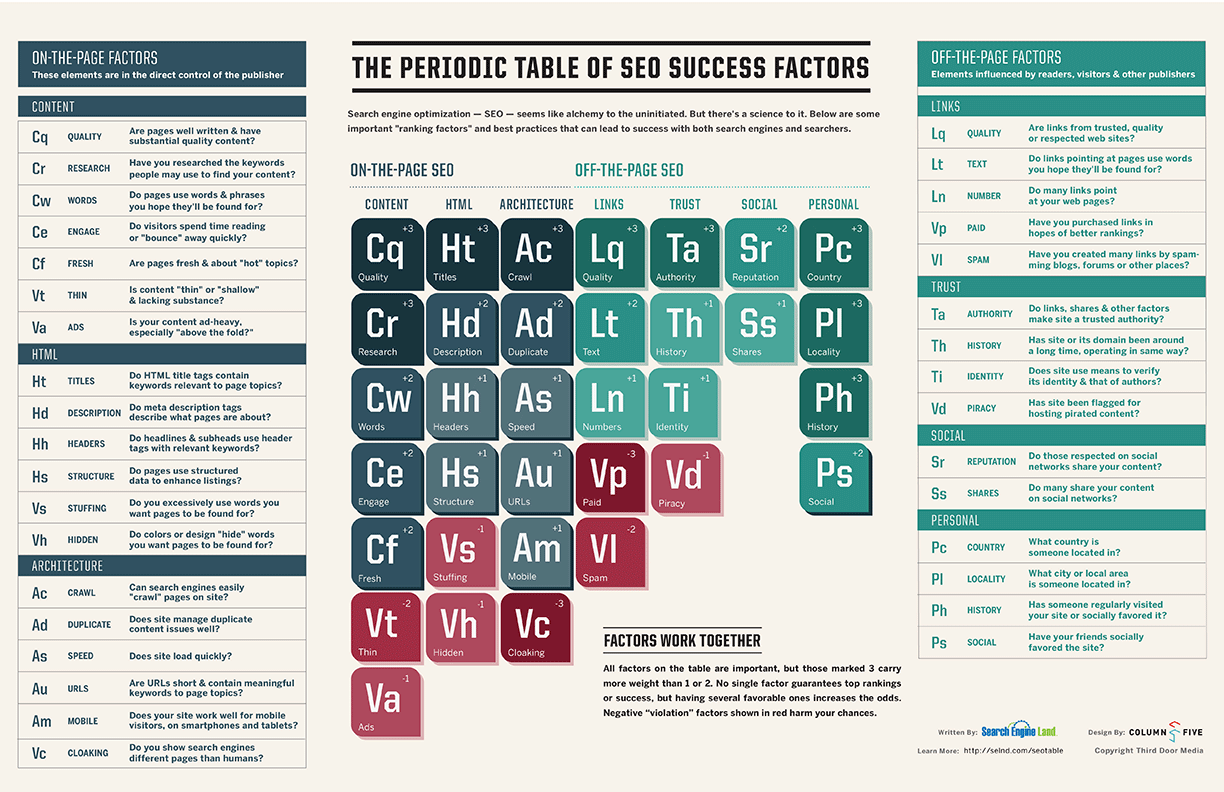
Getting top page rankings in search engines is not easy and requires patience. Basic SEO is about common sense and simplicity. The goal is to make your site easy to find, easy to follow, and easy to read for both visitors and search engines alike—supported by well written content and relevant incoming links. Here are five things you can do to satisfy both for long term success:
1. PAGE TITLES. Each page has a title that is displayed in the bar at the top of the browser window, and these titles play a large part in getting people to your site. Create a unique title (using the title tag) for each page. Include the strongest keywords and phrases that best describe the topic of the page. These will provide the highest return for your efforts.
2. HEADINGS WITHIN YOUR WEB PAGES. These should be written using header tags (h1, h2, h3). Provide clear heading text that further reinforces the keyword theme of the page. Keyword positioning is critical. Place the most important words first.
3. IMAGES AND GRAPHICS. Use the ALT attribute to provide an alternate text description that clearly describes what a graphic or an image is, or what a button does. Do not use ALT attributes to add keywords to a page. The purpose of the ALT attribute is to explain what an image or graphic is to people who can’t see it (as on some mobile devices), but it can also be read by search engines and thus can influence your search rankings.
4. WEB LINK DESCRIPTIONS. Anchor text is the clickable text that is displayed for a link in a browser window. Anchor text including keywords and meaningful phrases can improve search rankings, while throwaway phrases like “click here” or “read more” add ZERO value to those rankings. When employing this technique, make sure people understand what the link is for – or they won’t click it! Search engines assign greater value to phrases used in links than to those that are simply part of the text on the page.
5. LINKS TO YOUR WEB PAGES. In addition to a few, well placed incoming links from external sites, focus on establishing internal page links. Place strategic text links within the content of each page that link to your most important pages. Targeting internal links to your most important pages will rate the targeted page with greater value and importance when search engines calculate page rank.
While basic SEO can be time consuming in the beginning, and while it may take three to six months to see real results, it is well worth the effort and creates a solid foundation for future marketing efforts.
However, if search rankings are critical to your marketing efforts in the short term, hire an SEO monkey (or dog) with knowledge of advanced techniques to strategize, document, present, and execute an effective SEO campaign.
Posted in Web Marketing | 8 Comments »